

We’ve made our way in Prophecy Perspectives through the major prophetic milestones of Scripture, and now we’ve come to the end of the story—Revelation 21 and 22. These two chapters are the bookends to Genesis 1 and 2, and everything in God’s creation is going to come full circle: from the perfect beginning to the perfect ending. But there’s one issue that scholars debate: Is God going to renovate this present universe like a fixer-upper, or will He destroy it and create something brand new—Heaven and earth 2.0? A lot of excellent Bible teachers, like Randy Alcorn, hold the renovation view. But I believe there are four key reasons to hold the recreation view:
1. Bible passages that use destruction language
2. Revelation 20:11 where Heaven and earth “flee away” (what I call “un-creation”)
3. The theological reason that this world is the scene of the struggle with Satan and sin
4. And a word study showing that “pass away” in Revelation 21:1 means the same as “pass away” in 21:4—where no one would say tears and pain are just renovated.
As Chuck Swindoll says, “This isn’t a sequel. It isn’t a reedit. It’s a remake.” And knowing about this new world should change our world now.
Support Tipping Point Ministries
To help us produce more content like this please consider supporting Tipping Point! All income from subscriptions goes back into this ministry to cover production of this site, articles, videos, our annual conference and other resources. Please subscribe and give gift subscriptions. Thank you for buying our books. We are also grateful for one-time donations to our ministry. We appreciate your support!
The End Times Timeline: God’s Eternal Plan Revealed
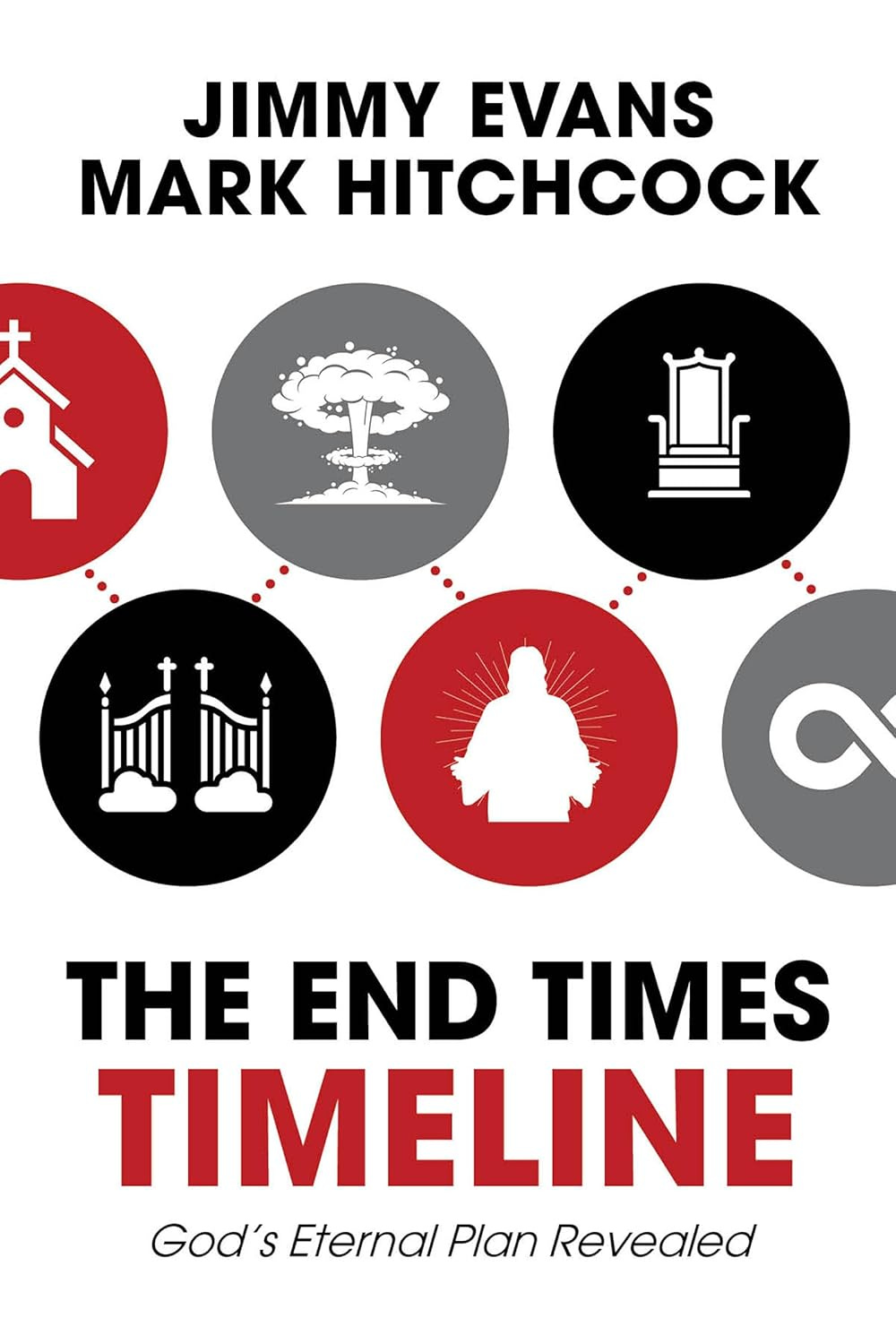
This small comprehensive book, The End Times Timeline provides believers with an accessible framework for understanding biblical prophecy. It traces God’s prophetic program from the Old Testament through the eternal state. What’s particularly noteworthy is how current events align with ancient predictions—Israel’s restoration, technological advances enabling global surveillance, and the geopolitical alignment of nations mentioned in Ezekiel 38–39.
The timeline identifies key prophetic milestones: the Rapture preceding the Tribulation, the rise of Antichrist, the rebuilt Temple, and Christ’s Second Coming. While some debate the timing of particular events like the Gog-Magog War, the overall framework reflects solid Bible research. This resource serves as an excellent tool for both new believers seeking prophetic clarity and mature Christians desiring to understand their place in God’s unfolding plan.
Personal Reflection & Group Discussion
For our paid subscribers, we provide a set of personal reflection and group discussion questions. These are designed to help you dig deeper into the content of the show, whether you’re watching alone, with a spouse, with a friend, or as part of a small group.
Personal Reflection
1. Dr. Hitchcock said knowing about the new world should change our world now—it should change our priorities and perspective. How does the promise of a New Heaven and New Earth affect the way I live today?
2. Psalm 102:25–26 says God will take off this universe like an old garment and change it. How does this image shape my view of material possessions and earthly accomplishments?
3. 2 Peter 3:11 asks: “Since all these things are to be destroyed in this way, what sort of people ought you to be in holy conduct and godliness?” How would I answer that question for my own life?
4. Revelation 21:4 says there will be no more death, mourning, crying, or pain—”the first things have passed away.” What griefs or pains am I carrying right now that I can entrust to God with hope because of this promise?
5. 2 Peter 3:14 says to be diligent to be found by Him “in peace, without spot and blameless.” Am I living with that kind of expectancy and readiness for Christ’s return?
Small Group Discussion
1. Dr. Hitchcock outlined four ages in the book of Revelation: the Church Age (Revelation chapters 1–3), the Tribulation Age (Revelation chapters 6–19, 7 years), the Kingdom Age (Revelation chapter 20, 1,000 years), and the Eternal Age (Revelation chapters 21–22, endless years). How does understanding this structure help us interpret the book of Revelation?
2. Randy Alcorn advocates the renovation view—that God will restore this earth like “an artist wiping away old paint on the same canvas.” Dr. Hitchcock advocates the recreation view—that God will destroy and replace it entirely. What are the strengths of each position, and which do you find more persuasive?
3. Dr. Hitchcock pointed out that the same Greek word for “pass away” is used in Revelation 21:1 (for Heaven and earth) and 21:4 (for tears, mourning, crying, and pain). Why is this word study significant for the renovation vs. recreation debate?
4. In Revelation 20:11, Heaven and earth “fled from His presence, and no place was found for them.” Dr. Hitchcock called this “un-creation”—God speaking the universe out of existence. What does it mean for the lost to witness creation disappearing right before the Great White Throne judgment?
5. Chuck Swindoll said the New Heaven and New Earth is “no reedit—it’s a remake.” How does this understanding magnify God’s power and His commitment to making all things new?
Study Notes Feature
Many of you have asked for study notes to help you follow along with Prophecy Perspectives. I’m making a resource available: a downloadable PDF with study notes for each episode. My prayer is that these notes will help you go deeper in your understanding of Bible prophecy and strengthen your walk with the Lord. I hope it’s a blessing to you.

Key Facts
1. Revelation chapters 21 and 22 are the bookends to Genesis chapters 1 and 2—everything comes full circle from the perfect beginning to the perfect ending.
2. The book of Revelation presents four ages: Church Age (Revelation 1–3, unknown duration), Tribulation Age (Revelation 6–19, 7 years), Kingdom Age (Revelation 20, 1,000 years), and Eternal Age (Revelation 21–22, endless years).
3. Revelation 21:1 is the only description of the actual “end of the world” in the Bible—the real end of this present creation and its replacement by a New Heaven and New Earth.
4. Two views exist on the nature of the New Heaven and New Earth: the renovation view (Randy Alcorn) sees it as a fixer-upper; the recreation view (Mark Hitchcock) sees it as Heaven and earth 2.0.
5. Dr. Hitchcock gives four reasons for the recreation view: (1) Bible passages using destruction language, (2) Revelation 20:11 “un-creation,” (3) theological reasons, and (4) word study of “pass away.”
6. Key passages supporting recreation: Psalm 102:25–26 (garment imagery), Isaiah 34:4, Isaiah 51:6, Matthew 24:35, and 2 Peter 3:10–12 (elements destroyed with intense heat—like a “universal meltdown”).
7. Revelation 20:11: “From whose presence earth and heaven fled away, and no place was found for them.” Mark Hitchcock calls this “un-creation”—God speaking the universe out of existence just as He spoke it into existence in Genesis 1.
8. The same Greek word for “pass away” in Revelation 21:1 (Heaven and earth) is used in 21:4 (tears, mourning, crying, pain). No one would say those are just renovated—they’re gone.
9. Chuck Swindoll: “This isn’t a sequel. It isn’t simply a re-edited version enhanced with clear sound, brighter colors, and digitally enhanced special effects. This is no reedit. It’s a remake.”
10. 2 Peter 3:11–14 applies this truth: knowing about the new world should change our world now—holy conduct, godliness, diligence to be found in peace, without spot and blameless.


